Act two · The idea
Revolution and the public idea
Massachusetts turned political argument into institutions: the first battle of the American Revolution at Lexington and Concord, a 1780 state constitution still in force, and a public commitment to schooling. The same decades show who was excluded from "liberty" — and how enslaved people in Massachusetts used the new constitution to win their own freedom in court.
Where the war began
On April 19, 1775, British regulars marched out of Boston to seize colonial military supplies stored in Concord. They met militia on Lexington Green at dawn, where eight Americans were killed, and again at the North Bridge in Concord later that morning. The National Park Service describes that day as the first battle of the American Revolution. The fighting continued as a running engagement along roughly sixteen miles back toward Boston, leaving hundreds of British and colonial casualties.
Minute Man National Historical Park preserves the ground between Lexington, Lincoln, and Concord, including the North Bridge and a restored stretch of the Battle Road. The volley at the bridge is the action later remembered as the "shot heard round the world," a phrase from a nineteenth-century poem rather than a record of any single shot.
The Revolution's Boston chapters — the 1770 Massacre, the 1773 Tea Party, Paul Revere's ride, the Old North Church, the fighting at Bunker Hill — are the better-known images. The decisive point is that this was where colonial grievance first became organized armed resistance, and where a set of political claims about consent and self-government were put to the test.
A constitution that still runs
When independence forced the former colonies to design governments, Massachusetts produced one that has outlasted all the others. The Constitution of the Commonwealth of Massachusetts was adopted in 1780, with John Adams as principal drafter, and the state describes it as the oldest functioning written constitution in the world. It predates the federal Constitution and influenced its structure, including the separation of powers into three branches.
Massachusetts then helped bring the national framework into being. On February 6, 1788, it became the sixth state to ratify the United States Constitution, by a close convention vote, and its ratification was the first to attach a list of proposed amendments — an approach that fed into what became the Bill of Rights.
These documents matter here not as relics but as working instruments. The 1780 constitution's declaration of rights was the text that enslaved people in Massachusetts would soon turn against the institution of slavery itself.
Liberty's limits, and who tested them
The language of freedom did not extend to everyone who lived under it. Slavery was legal in Massachusetts at the time of the Revolution, and the abstractions in the new constitution sat alongside an unfree population. What changed that was litigation by the enslaved themselves.
In 1781 Elizabeth Freeman, known as Mum Bett, sued for her freedom in western Massachusetts, arguing that the new constitution's declaration that "all men are born free and equal" applied to her. A county court agreed and freed her. A parallel series of cases involving Quock Walker reached the Supreme Judicial Court, where in 1783 Chief Justice William Cushing instructed a jury that slavery was incompatible with the state constitution.
These rulings did not pass a single abolition statute, but together they made slavery legally untenable in Massachusetts; the 1790 federal census recorded no enslaved people in the state. The Black Heritage Trail on Beacon Hill, administered by the Boston African American National Historic Site, traces the nineteenth-century free Black community that followed — its churches, schools, and central role in abolition, the Underground Railroad, and the fight for equal education. The 1806 African Meeting House on the trail is the oldest standing Black church building in the country.
The knowledge half: Cambridge
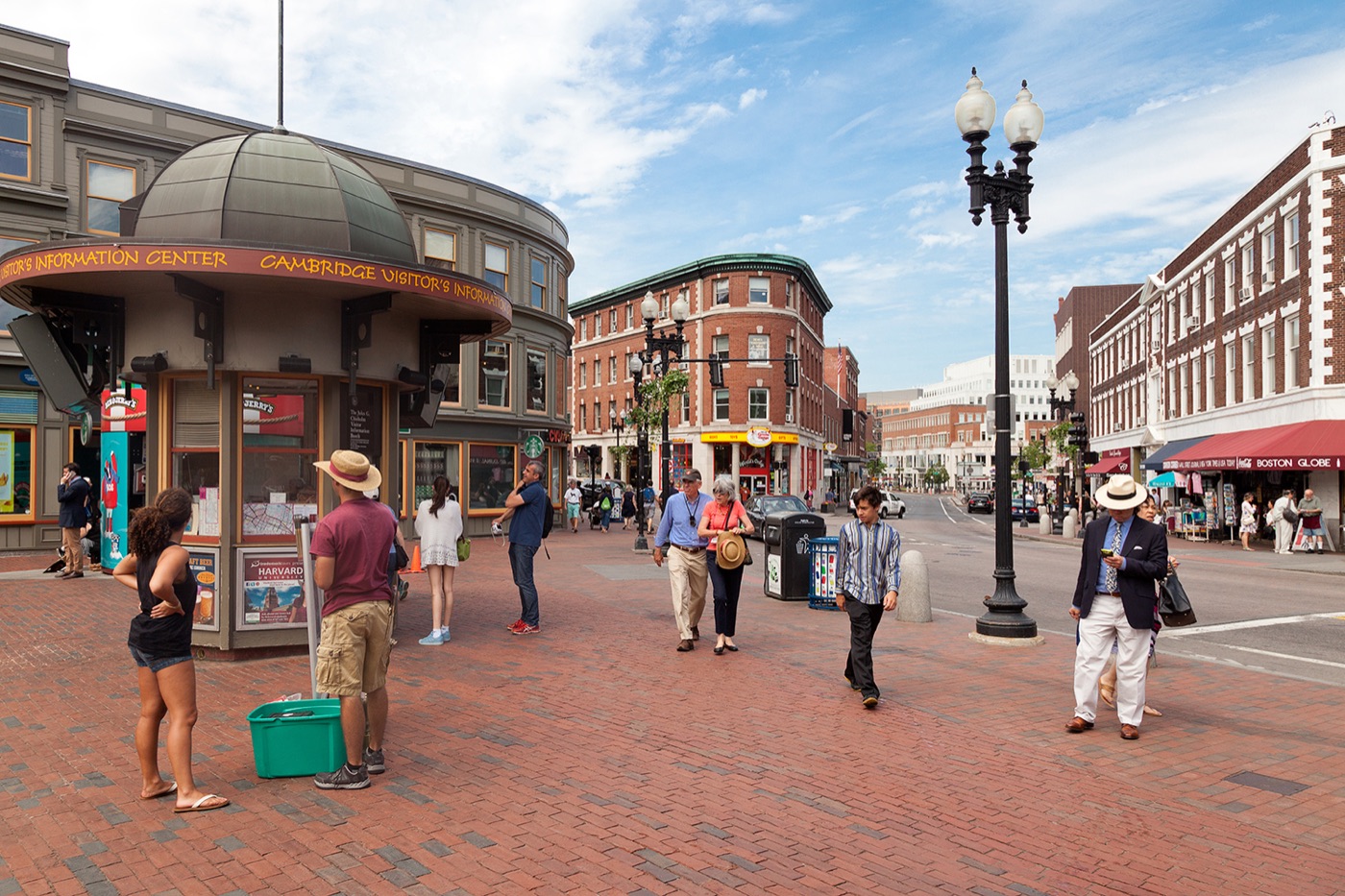
Across the Charles River from Boston, Cambridge holds the other half of the Massachusetts public idea: that a self-governing society needs educated citizens. Harvard was founded in 1636 by vote of the Massachusetts Bay Colony's General Court and is the oldest institution of higher education in the United States. It began as a small college to train clergy and grew into a research university.
The Massachusetts Institute of Technology, chartered in 1861 to advance useful knowledge, added a different model built around science, engineering, and applied research. Classes opened a few years later, after the Civil War.
For visitors, these two institutions are the anchors of the Cambridge experience and the easiest way to read the state's long bet on schooling — a bet that runs from the colonial founding of Harvard to the research economy of Kendall Square today. Both are working campuses, so plan around term schedules and use the visitor centers as starting points.
Sources
Reviewed source trail
- Minute Man National Historical Park — April 19, 1775 (U.S. National Park Service) — checked 2026-06-22
- Boston African American National Historic Site / Black Heritage Trail (U.S. National Park Service) — checked 2026-06-22
- John Adams & the Massachusetts Constitution (Mass.gov) — checked 2026-06-22
- The Ratification of the United States Constitution (Mass.gov) — checked 2026-06-22
- Massachusetts Constitution and the Abolition of Slavery (Mass.gov) — checked 2026-06-22
- History timeline — Harvard University — checked 2026-06-22