City guide · North Shore
Salem: the witch trials, the world port, and the houses of memory
Salem, on Massachusetts's North Shore in Essex County, holds two histories at once. In 1692 a panic over witchcraft sent about twenty-five innocent neighbors to their deaths, and the city now marks that injustice through a memorial, a colonial-era burying ground, and the surviving house of one of the judges. A century later Salem grew into one of America's great maritime ports, leaving behind a national park on its waterfront, a district of Federal-style merchant houses, the birthplace and workplaces of Nathaniel Hawthorne, and a museum whose collections began with returning sea captains. This guide visits the sites that carry that memory, treating the accused of 1692 as the wronged people they were rather than as folklore.
The memory of injustice
In 1692 a wave of witchcraft accusations swept through Essex County, beginning in Salem Village, the rural parish that is now the separate town of Danvers. The first claims of affliction emerged at the parsonage of the Reverend Samuel Parris in January of that year. Within months the panic spread across the region and reached the special Court of Oyer and Terminer, convened to hear and determine the cases. The episode led to the deaths of about twenty-five innocent women, men, and children.
Nineteen of the accused were hanged at Proctor's Ledge, a rocky outcrop at the base of Gallows Hill. Giles Corey, who refused to enter a plea, was pressed to death under heavy stones, the only such execution in Massachusetts history. The people who died were neighbors and church members, not witches. They were wronged by their own community and by a court that admitted evidence no court should have allowed.
The city marks that loss directly. The Salem Witch Trials Memorial, dedicated in August 1992 with Elie Wiesel as keynote speaker, sets twenty cantilevered stone benches bearing the victims' names and execution dates beside the Charter Street Cemetery. That cemetery, also called the Old Burying Point, is Salem's oldest European burial ground, referenced in town records by 1637, and it holds the graves of several of the trial judges.
A short walk away stands the Witch House, the home of Judge Jonathan Corwin, who served on the Court of Oyer and Terminer. It is one of the very few structures still standing in Salem with a direct tie to 1692. No interrogations or trials were held inside it, despite later legend; its value is as a rare surviving witness to the world that produced the tragedy.
The harbor and the world
Long before the English arrived, the land was Naumkeag, an Indigenous name commonly translated as fishing place, home to the Naumkeag people of the Massachusett. In 1626 Roger Conant led a small group of settlers there from Cape Ann; the town took the name Salem in 1629.
After the Revolution, Salem became one of the young nation's leading ports. Its captains and merchants sailed to ports across Asia, India, Africa, and the Pacific, and the wealth those voyages produced reshaped the town.
That maritime story is preserved at Salem Maritime National Historical Park, established on March 17, 1938 as the first National Historic Site in the United States; it was redesignated a National Historical Park in July 2025. The park lines the working waterfront with historic wharves and buildings, including Derby Wharf.
At the head of the waterfront stands the Custom House, built in 1819 on Derby Street directly across from Derby Wharf. It served the federal customs service for more than a century and remains the most visible reminder of the era when Salem's fortunes rose and fell with the tide.
The houses and the architecture
The wealth that came off the wharves was built into the town itself. The McIntire Historic District, centered on Chestnut Street, gathers the merchant houses raised during Salem's maritime height.
The district takes its name from Samuel McIntire, the Salem woodcarver and architect whose work shaped the look of the period. The homes are largely in the Federal style, restrained brick and clapboard facades with carefully detailed doorways and cornices.
Walking the streets today, the connection between commerce and architecture is plain: the same trade that filled Salem's counting houses also paid for some of the finest early-republic domestic architecture in New England.
Literature and museums
Nathaniel Hawthorne was born in Salem on July 4, 1804, into a family long rooted in the town, one ancestor among the witch-trial judges. He later worked as a surveyor at the Custom House from 1846 to 1849, and he opened The Scarlet Letter with a sketch about that building.
Hawthorne also gave his name to one of the city's landmarks through fiction. The House of the Seven Gables, built in 1668 by the merchant John Turner, inspired Hawthorne's 1851 novel of the same title through his visits to a relative who lived there. In 1908 the philanthropist Caroline Emmerton bought the house and had it restored, opening it to the public in 1910 as both a museum and a settlement house serving immigrant families, a role it has kept for more than a century.
Salem's other great cultural institution, the Peabody Essex Museum, traces its roots to the 1799 founding of the East India Marine Society, an organization of Salem captains and supercargoes who had rounded the Cape of Good Hope or Cape Horn. Their charter called for a cabinet of curiosities gathered from their voyages, and the collection has grown and operated continuously ever since, making it among the oldest museums in the country.
The coast and the modern city
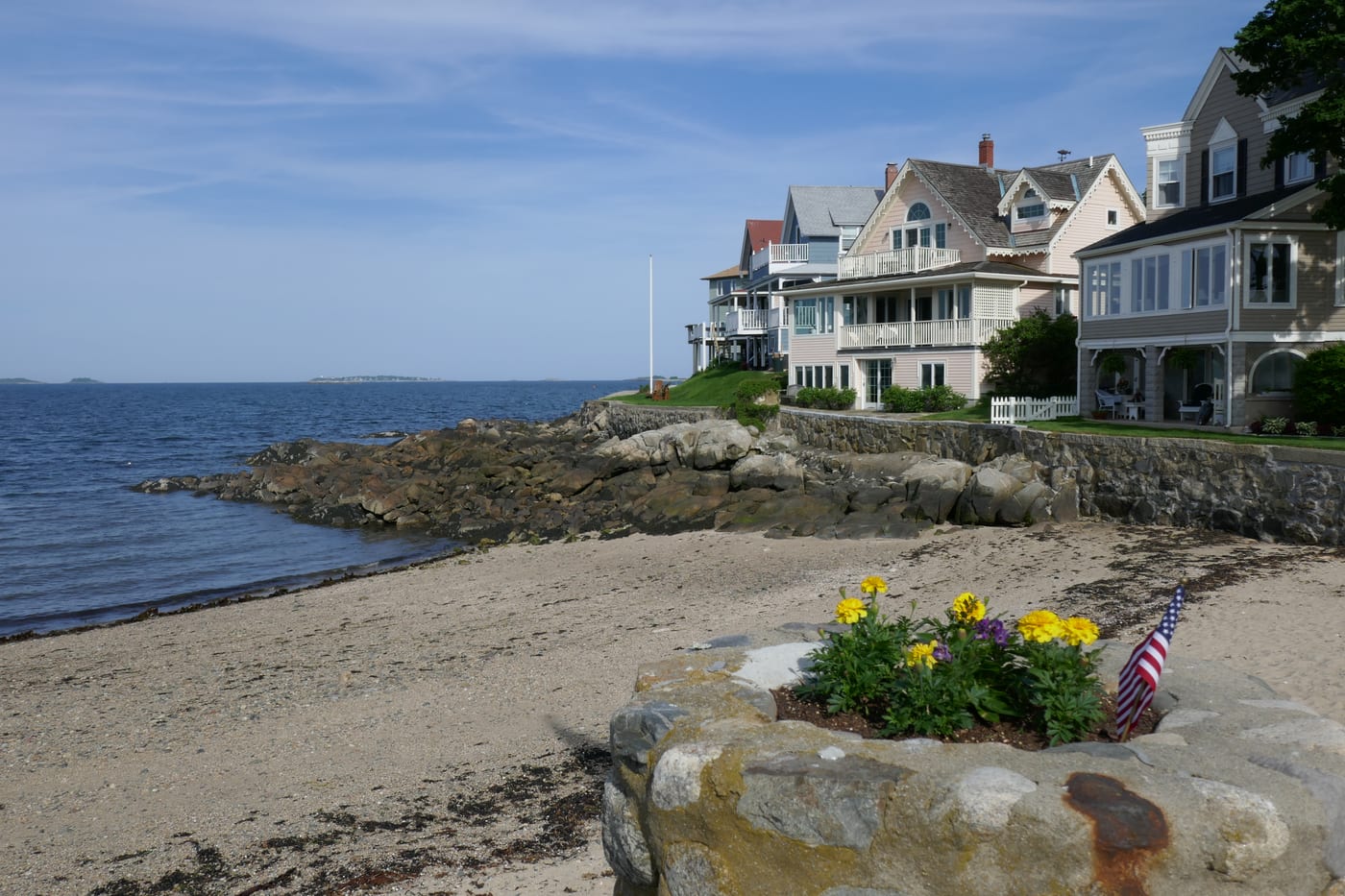
Salem still meets the sea on every side. Winter Island, an approximately fifty-four-acre peninsula at the mouth of Salem Harbor, is now a city park with beaches, a boat ramp, a campground, and the Fort Pickering lighthouse, built in 1871, marking the harbor entrance. Nearby Salem Willows and the broader waterfront draw residents and visitors to the shore.
The city also keeps a living window onto its earliest years at Pioneer Village, opened in June 1930 for the Massachusetts Tercentenary as the country's first living-history museum, recreating Salem as it stood around 1630.
Modern Salem balances three things at once: a working community of residents, a tourism economy, and a contemporary witch and occult culture that has grown up around the city's name. It is worth stating plainly that today's self-identified witches and Pagan practitioners are not connected to the people accused in 1692. Those victims were not witches; they were ordinary townspeople killed in a miscarriage of justice, and the modern presence is a separate, contemporary phenomenon.
Holding both stories with care is the work the city has taken on: honoring the memory of the wronged while telling the fuller history of a port that once reached across the world.
Places worth a stop
Where to go in Salem
Sources
Reviewed source trail
- Peabody Essex Museum — The Salem Witch Trials of 1692 — checked 2026-06-22
- National Park Service — Salem Maritime National Historical Park — checked 2026-06-22
- The House of the Seven Gables — History — checked 2026-06-22
- Destination Salem — Native History and Indigenous Acknowledgement — checked 2026-06-22
- Charter Street Cemetery Welcome Center — Witch Trials Memorial — checked 2026-06-22
- Salem Witch Museum — Proctor's Ledge — checked 2026-06-22
- Pioneer Village (Salem) — official site — checked 2026-06-22