City guide · South Coast
New Bedford: the whaling city, the freedom city, and the working port
New Bedford sits on the Acushnet River where it opens into Buzzards Bay, on the South Coast of Massachusetts. It was the world's leading whaling port in the nineteenth century, a refuge for people escaping slavery and the place where Frederick Douglass took his name, a textile city built on immigrant labor, and today the most valuable commercial fishing port in the United States. This guide traces those overlapping histories and the living city they left behind.
The whaling city
Long before there was a city here, this was Wampanoag land. The riverfront and the wider territory that English settlers later called Old Dartmouth belonged to the Wampanoag people; in 1652 Plymouth Colony purchased the Dartmouth lands from Massasoit, sachem of the Wampanoag, and his son Wamsutta. Quaker families settled the area, and their meetings and commercial networks shaped the town that grew up around the harbor.
Whaling made the place. New Bedford's deep, sheltered harbor gave it an edge over Nantucket, whose shallow approaches and shifting shoals limited the larger ships the industry needed. By 1823 New Bedford had passed Nantucket in annual whaling departures, and it went on to become the world's leading whaling port. The wealth came from what the whales gave up: whale oil for lamps and machinery, and clean-burning spermaceti candles. That trade earned New Bedford its enduring nickname, the City that Lit the World.
The peak came in 1857. In that year the New Bedford fleet numbered 329 vessels, roughly half of the entire American whaling fleet of 593, and the customs district handled a large share of the world's whaling. The waterfront was an industrial machine of wharves, counting houses, candleworks, riggers, and coopers, and for a time New Bedford counted among the wealthiest cities in the country per resident. It had been incorporated as a city in 1847, near the height of that prosperity.
Several places hold this history in plain view. The New Bedford Whaling National Historical Park covers thirteen blocks of the old port. The New Bedford Whaling Museum, the largest museum devoted to the era, anchors the district. Seamen's Bethel, dedicated in 1832, is the chapel Herman Melville turned into the Whalemen's Chapel in Moby-Dick; Melville worshipped there before shipping out on the whaler Acushnet, which sailed on January 3, 1841, and the bow-shaped pulpit visitors see today was added in 1961, after the novel and its film made readers expect it. A short walk uphill, the Rotch-Jones-Duff House, built in 1834 for the whaling merchant William Rotch Jr., shows how that money lived.
The freedom city
New Bedford was also a freedom city. Its Quaker abolitionists and its established free Black community made the port a destination on the Underground Railroad, a place where people escaping slavery could find shelter, work on the docks and ships, and a measure of safety the law elsewhere denied them.
The most famous of those arrivals came in 1838. Frederick and Anna Douglass made their first free home in the house of Nathan and Polly Johnson, a prosperous free Black couple who were active in the antislavery movement. It was here that the man who had escaped under the name Frederick Bailey took a new surname: Nathan Johnson, noting how many Johnsons already lived in New Bedford, suggested Douglass, after a character in Walter Scott's poetry. The Nathan and Polly Johnson House was designated a National Historic Landmark in 2000.
That history is concentrated in the neighborhood now known as Abolition Row, around Seventh Street, where the Johnson House stands. The respectful way to tell it is the accurate way: these were freedom-seekers and people who had escaped slavery, sheltered and employed by a community that organized to protect them, not passive figures in someone else's story.
The working city
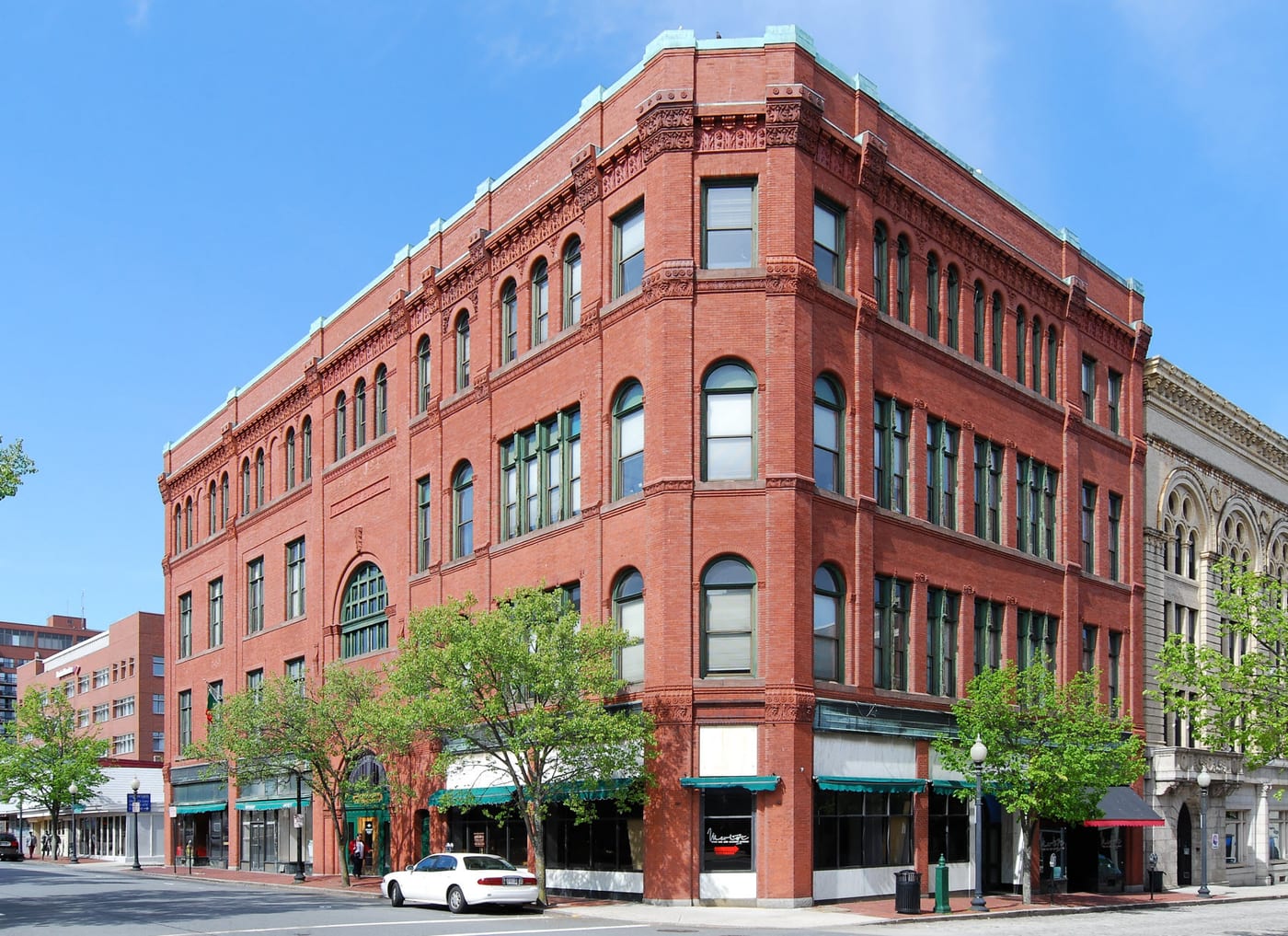
When whaling declined, New Bedford did not coast on its harbor. It reinvented itself as a textile city. Wamsutta Mills, incorporated in 1846 as the city's first cotton mill, opened on the banks of the Acushnet and grew into one of the largest cotton-manufacturing operations anywhere; by the 1890s the Wamsutta complex was described as the largest cotton weaving plant in the world, and fine cotton goods steadily overtook whaling as the city's principal industry.
The mills ran on people. Wave after wave of immigrant workers, from the Azores and mainland Portugal, from French Canada, Britain, Ireland, Poland, and elsewhere, filled the looms and the tenements around them. The work was hard and the hours long, and labor disputes punctuated the city's history.
This is the part of New Bedford that resists the postcard. It was a heavy industrial and port city, with the grit and the conflicts that came with that, not only a romantic harbor of tall ships. The brick mills and dense working neighborhoods are as much a part of its fabric as the cobblestones near the waterfront.
The living port and its communities
New Bedford never stopped being a working port. By value of catch it has ranked as the most valuable commercial fishing port in the United States every year since the early 2000s, a position driven above all by the Atlantic sea scallop fleet, which accounts for the great majority of the port's landed value. The waterfront is not a museum set; it is a place where boats are unloaded, ice is taken on, and crews ship out.
The people who built and still run that industry are central to the city, not decoration. New Bedford and the surrounding South Coast are home to one of the oldest and largest Cape Verdean communities outside Cabo Verde, with roots in the whaling crews that signed on at the islands and settled here; the connection runs so deep that New England is sometimes called the tenth island of the archipelago. Azorean, Madeiran, and broader Portuguese communities are equally woven into the city, and the Feast of the Blessed Sacrament, begun by Madeiran immigrants in 1915, is one of the largest Portuguese festivals in the world.
The New Bedford Fishing Heritage Center documents this living culture from the inside, including its More Than a Job project on the people of the commercial fishing industry. It treats the port as a working community with families, risks, and traditions, which is the honest way to understand it.
The coast and the everyday city
The city meets the water in places you can walk. At Clark's Point, Fort Taber and the granite Fort Rodman guard the harbor entrance within a public park, with open views down Buzzards Bay. The New Bedford Hurricane Barrier, dedicated in 1966 after the destructive hurricanes of 1938, 1944, and 1954, is one of the largest stone structures of its kind on the East Coast, and the HarborWalk lets you trace the working shoreline on foot.
Inland, Buttonwood Park offers a different register. The Olmsted firm, through Charles Eliot of Olmsted, Olmsted and Eliot, prepared a plan for the park in the mid-1890s, and while not every element was carried out, the park grew along those lines and today includes the well-regarded Buttonwood Park Zoo.
Downtown, the restored Zeiterion theater anchors a Seaport Cultural District of galleries, music, and the city's monthly arts nights. The food follows the harbor and the neighborhoods: fresh scallops and groundfish alongside Portuguese and Cape Verdean cooking, from cacoila and caldo verde to cachupa.
The result is a real, lived-in city rather than a theme park. New Bedford carries its whaling fame, its freedom history, and its industrial past at the same time as it goes about the ordinary work of a fishing port and a home. That layering, rather than any single chapter, is what makes it worth understanding.
Places worth a stop
Where to go in New Bedford
Sources
Reviewed source trail
- New Bedford Whaling National Historical Park – History & Culture (NPS) — checked 2026-06-23
- New Bedford Whaling Museum – Timeline 1602 to Present — checked 2026-06-23
- Seamen's Bethel – New Bedford Whaling National Historical Park (NPS) — checked 2026-06-23
- Nathan and Polly Johnson House (NPS) — checked 2026-06-23
- Rotch–Jones–Duff House and Garden Museum — checked 2026-06-23
- Wamsutta Mills (Wikipedia, citing New Bedford textile history) — checked 2026-06-23
- New Bedford named most valuable U.S. fishing port (Saving Seafood / NOAA Fisheries data) — checked 2026-06-23
- Buttonwood Park – Olmsted Network — checked 2026-06-23